
Diabetes
Take Care, Take Control Program
A program to help CountyCare members control their blood sugar levels and live a fulfilling life.
One in ten people have diabetes, and one in five adults with diabetes do not even know they have it. CountyCare’s Take Care & Take Control program is a guide to learning about diabetes and how to manage it.
The Take Care, Take Control program helps you:
1.
Learn simple steps to lower your risk of diabetes.
2.
Understand what you can do if you have diabetes or prediabetes.
3.
Know which doctors and health care workers can help you.
Take Care, Take Control
What is diabetes?
Diabetes is a disease that happens when your blood sugar (also called blood glucose) is too high.
Your body makes sugar on its own, and it can also come from the food you eat. Your body uses a hormone called insulin to help move sugar from your blood into your cells for energy. When you have diabetes, your body either does not make enough insulin or cannot use it well. When sugar can’t get into your cells, it builds up in your blood. This causes high blood sugar.

What are the types of diabetes?
There are four types of diabetes.
Prediabetes
Prediabetes is the stage before type 2. Your blood sugar is higher than normal but not high enough to be called diabetes. Most people who have prediabetes will get type 2 diabetes within 10 years if they don’t make changes.
Gestational Diabetes
Gestational diabetes develops in some people during pregnancy. It usually goes away after the baby is born, but it raises your risk of getting type 2 diabetes later in life.
Type 2 Diabetes
Type 2 diabetes means your body doesn’t use insulin well (called insulin resistance). About nine in 10 people with diabetes have type 2. It is the most common type. You can get type 2 diabetes at any age, but the risk goes up as you get older. Risk factors include being overweight or obese, being over age 35, having a family history of diabetes and/or not being physically active.
Type 1 Diabetes
Type 1 diabetes is an autoimmune disease in which your body attacks the pancreas (where insulin is created). This means your body makes little or no insulin. Type 1 is usually diagnosed in childhood or adolescence, but it can be found at any age. People with type 1 need to take insulin every day to stay alive and healthy.
What are the symptoms of diabetes?
Each person is different and may not have all these symptoms.
Type 2 diabetes can develop slowly over years. Sometimes, there are no symptoms at all. This is why it’s important to see your doctor every year for a blood test.
Common symptoms of diabetes:
- Increased thirst and dry mouth
- Peeing often
- Feeling very tired
- Blurred vision
- Losing weight without trying
- Numbness or tingling in your hands or feet
- Cuts and sores that heal more slowly than normal
- Frequent skin or yeast infections
How is diabetes diagnosed?
Your doctor will do a blood test to check your blood sugar level.
This can be done at a lab or clinic, and results usually come back quickly. Your doctor will talk with you about what your numbers mean and the next steps.
Here are three common tests:
| A1C test | Shows your average blood sugar level over the past two or three months |
| Fasting blood sugar test | Measures your blood sugar after not eating for 8-12 hours |
| Glucose tolerance test | Measures how your body handles sugar |
What are the risks of having diabetes?
Diabetes can harm your:
- Eyes
- Kidneys
- Nerves
- Heart
Managing your diabetes can help prevent these problems.
How is diabetes managed?
Your doctor may help you manage your diabetes with healthy eating and exercise.
Your doctor may also prescribe insulin or other medications to help control your blood sugar levels. Everyone should be screened for diabetes by the age of 35 or sooner if you have a family history.
If you have type 2 diabetes, making lifestyle changes can improve your blood sugar levels.

Diet – Eat more non-starchy vegetables (leafy greens, broccoli, peppers, cucumbers), lean proteins (fish, skinless poultry, beans, tofu), whole grains (brown rice, quinoa, oats, whole-wheat bread), and healthy fats (avocado, nuts, seeds, olive oil). Try to limit processed foods, sugary drinks and foods high in unhealthy fats (saturated and trans fats).

Exercise – Moving your body every day can help you reach a healthy weight, keep your blood sugar levels steady and make your body use insulin better.

Stress – Practice deep breathing, take breaks or find other healthy ways to relax. Stress can raise blood sugar levels.

Sleep – Get enough good-quality sleep each night. Poor sleep can raise blood sugar levels.
Blood sugar levels – Test often to see how your daily changes impact your blood sugar levels. Talk to your doctor about your A1c number and what it means for you. A1c is a measure of your blood sugar levels.

Doctor visits – Seeing your doctor can help you learn about treating your diabetes and keeping your blood sugar levels steady.
Eye exam – Get annual eye exams. Diabetes can damage your eye health.

Foot care – See a podiatrist (foot doctor). Diabetes can lead to nerve damage and decrease blood flow to the feet. This can lead to foot ulcers, infections and even amputations.

Blood pressure – Check blood pressure regularly. Diabetes can cause high blood pressure.

Cholesterol – Have your cholesterol checked at least once a year. Diabetes can increase the risk of heart disease.

Medications – Take medicines as prescribed, even if you feel great. Medicines only work when you take them. Take statin medication prescribed by your doctor. Statins help lower your risk of heart disease and stroke.
Benefits for Members with Diabetes
CountyCare offers special benefits to help you manage your blood sugar and improve your health.
Weight Watchers
If you are overweight, losing weight can improve or even reverse type 2 diabetes. CountyCare offers free Weight Watchers vouchers for members ages 13 and older. These vouchers let you attend meetings at no cost. These vouchers do not cover the cost of Weight Watchers meals.
How to get vouchers: Call Member Services at 312-864-8200. CountyCare will mail them to your home.
Glucometers
A glucometer is a small device that allows you to check your blood sugar levels at home. You prick your finger to get a drop of blood that you place on a test strip and put into the glucometer. Glucometers are covered by Illinois Medicaid. Talk to your doctor to get a glucometer.
Continuous glucose monitors
A continuous glucose monitor is a small device you wear on your skin. It checks your blood sugar every few minutes and alerts you if your levels are too high or low. Continuous glucose monitors are covered by Medicaid in Illinois. Talk to your doctor to receive one.
Blood pressure monitors
Diabetes can lead to high blood pressure. You can get a free blood pressure monitor to use at home. Ask your doctor to submit a form to CountyCare, and the monitor will be mailed to you.
Cash rewards
Earn rewards on your Visa Rewards Card for seeing your doctor and filling your prescriptions.
- PCP visit reward: Get $25 every year (effective 3/1/26) when you see your primary care doctor for your yearly checkup.
- Diabetes monitoring reward: If you are age 18 or older and get your blood and urine screenings once a year, you get $25 (effective 3/1/26).
If you use this program for rent or utilities, Housing and Urban Development (HUD) requires it to be reported as income if you seek assistance. Contact your local HUD office if you have questions.
Help to quit smoking
Quitting smoking can decrease your risk of developing type 2 diabetes. CountyCare is proud to partner with the American Lung Association (ALA) to offer free help to quit.
- Call the Tobacco QuitLine at 1-800-LUNGUSA (1-800-586-4872)
- Hours: Monday-Friday 7 a.m. – 9 p.m. CT, weekends 9 a.m. – 5 p.m. CT
- You can leave a message after hours to get a call back
Medication
Your doctor may prescribe medications to help with your diabetes. There are no costs for covered medications while with CountyCare.
Free transportation
CountyCare provides rides to and from medical appointments. Click here to set up a ride today.
Care coordination
All CountyCare members with diabetes can get care coordination services. Having a care coordinator means you have someone on your side to help you stay healthy. Your care coordinator can
- Help you find a doctor
- Arrange rides to your appointments
- Connect you to food and housing resources
To talk with a care coordinator, please call Member Services at 312-864-8200 / 855-444-1661 (toll-free) / 711 (TDD/TTY) and ask to speak with a care coordinator.
You can also fill out this Referral to Care Coordination form, and a care coordinator will contact you directly.
You may opt out of care coordination at any time by calling 312-864-8200.
Illinois Medicaid Managed Care Diabetes Benefit
People enrolled in Illinois Medicaid are eligible for diabetes management services. Talk to your primary care provider (PCP) to access these programs.
Diabetes Self-Management Education and Support (DSMES):
Program that offers services such as counseling on long-term dietary changes, increased physical activities and diabetes self-care skills.
Diabetes Prevention Program (DPP):
A free lifestyle change program that includes dietary and nutritional counseling, fitness assessments and educational sessions for people with prediabetes.
Your Diabetes Care Team
If you have diabetes, you may meet different health care providers. Your primary care provider is your main health care provider.
This can be a family doctor, general internist, physician assistant or nurse practitioner. They do your yearly checkups, treat common illnesses and send you to specialists if needed.
Other health providers on your diabetes care team can include:
| Certified Diabetes Care and Education Specialist (CDCES) | A health care provider with training in diabetes. |
| Dentist | A doctor who takes care of your teeth and gums. |
| Endocrinologist | A doctor who treats diabetes and other hormone diseases. |
| Fitness Professional | A physical therapist, personal trainer or exercise physiologist may help you find exercises that are safe for you. |
| Mental Health Professional | A psychiatrist, psychologist or clinical social worker helps people with the emotional issues of living with diabetes. |
| Nephrologist | A doctor who treats kidney diseases. |
| Nurse | A nurse gives care during your visits, does tests ordered by your doctor and teaches you about your health. |
| Nurse practitioner (NP) | A NP is a nurse who can diagnose and treat health problems. Your primary care provider may be an NP. |
| Nursing assistant (NA) or medical assistant (MA) | A NA or MA helps with basic care like checking your blood pressure and other vital signs. |
| Ophthalmologist or Optometrist | An eye doctor who treats vision problems. |
| Pharmacist | A pharmacist can answer questions about your medications and tell you if one of your medications will interact with food or other medications. |
| Physician assistant / physician associate (PA) | A PA trained to treat your overall health. Your primary care provider may be a PA. |
| Podiatrist | A foot doctor who treats feet and lower leg problems. |
| Registered Dietician Nutritionist (RDN) | A dietician is a food and nutrition expert. They can help you make eating changes. |
Do you know who your primary care provider (PCP) is? You can use the CountyCare member portal to find out who your PCP is and schedule an appointment.
Use CountyCare’s Find a Provider Tool to find the right provider for you!
Resources
Want to learn more about diabetes? Visit these trusted organizations:
American Diabetes Association (ADA)
ADA is an organization of volunteers, families and health care professionals working to prevent and cure diabetes.
Centers for Disease Control and Prevention (CDC)
The CDC is the nation’s top public health agency that studies and shares ways to prevent and control disease.
National Institute of Diabetes and Digestive and Kidney Diseases
NIDDKD is a part of the National Institutes of Health (NIH). NIH provides research, training, and education to prevent and treat heart, lung and blood disorders.
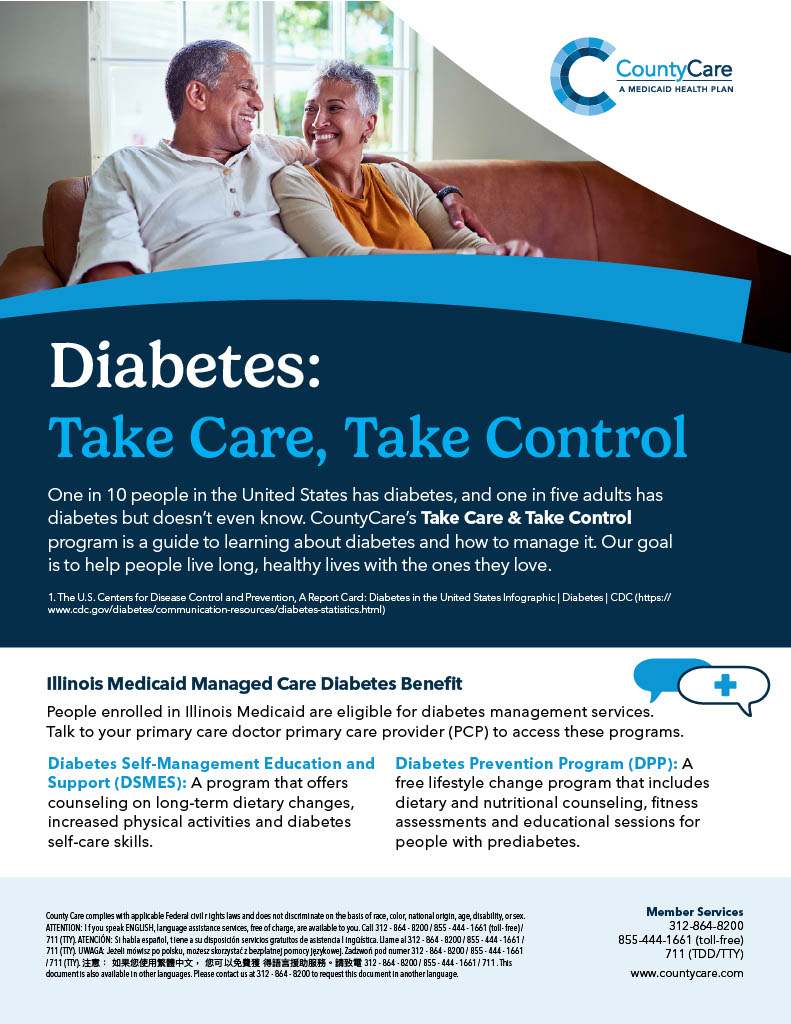
Click here to download the Diabetes: Take Care, Take Control brochure.
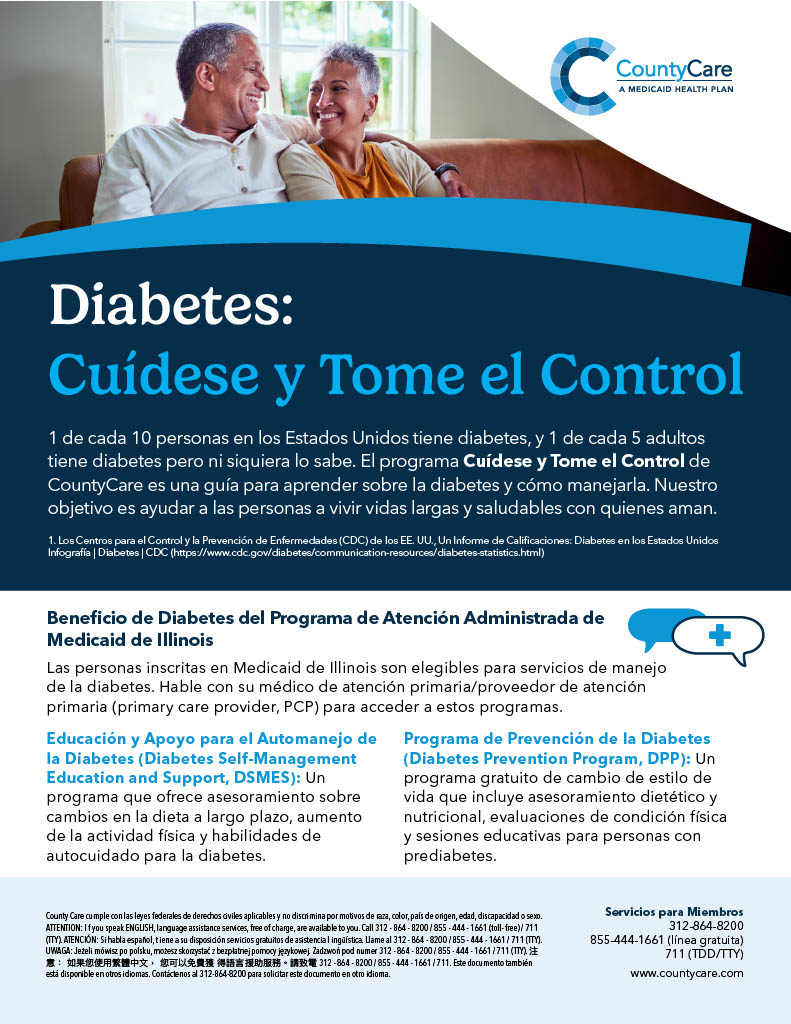
Haga clic para descargar el folleto Diabetes: Cuídese y tome el control.